Bamboo flooring looks expensive, wears like hardwood, and comes from a plant that regrows in five years instead of fifty. No wonder it keeps showing up in kitchens, hallways and home offices. But here’s the part most homeowners find out too late: the cleaning routine that keeps oak looking sharp can quietly ruin bamboo.
The good news is that caring for it isn’t complicated once you understand what you’re actually protecting. At Floor Way, we recommend using the right tools and controlling moisture levels to preserve your bamboo flooring’s finish. Get it right, and your floor will hold its shine for decades. Get it wrong, and you’ll be looking at a dull, cloudy surface within a season. Here’s exactly how to do it properly.
Why Bamboo Floors Need Their Own Cleaning Rules?
Bamboo isn’t hardwood flooring at all, botanically it’s grass. The planks are made by slicing, pressing and gluing bamboo stalks together, then sealing the surface with a protective coating, usually polyurethane or aluminium oxide.
That coating is the real hero. When you clean your floor, you’re not scrubbing bamboo, you’re maintaining a thin transparent layer sitting on top of it. Damage that layer and moisture, dirt and stains reach the raw fibres underneath, where the damage becomes permanent.
Two things break that finish down faster than anything else: standing moisture and pH extremes. Almost every rule below traces back to one of those two.
Type you own changes How Careful you need to Be
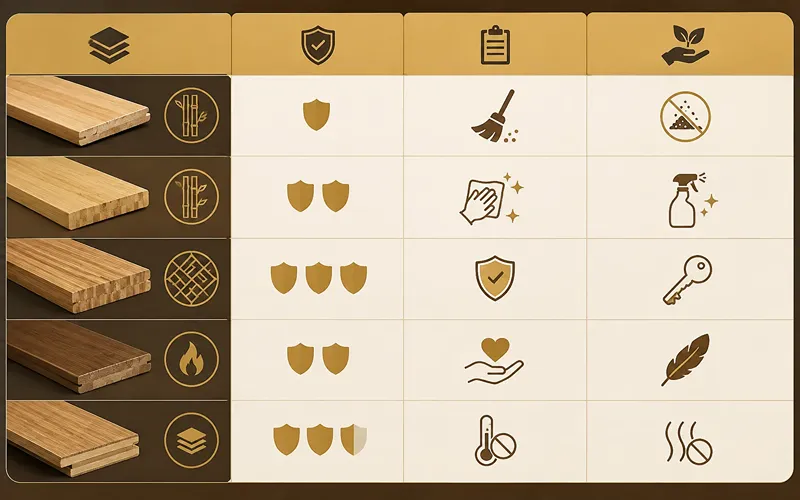
| Type | Relative hardness | Care note |
| Horizontal bamboo | Softest | Dents easily; keep grit off it |
| Vertical bamboo | Moderate | Standard care is enough |
| Strand-woven bamboo | Hardest, rivals oak | Tough surface, but the finish still scratches |
| Carbonized bamboo | Softer than natural | Heat-treated for colour; handle gently |
| Engineered bamboo | Varies | Adhesive layers hate heat and steam |
If you own carbonized planks, treat them like the delicate option in the room. The heat process that gives them that rich caramel tone also costs them structural strength.
What You Need Before You Start?
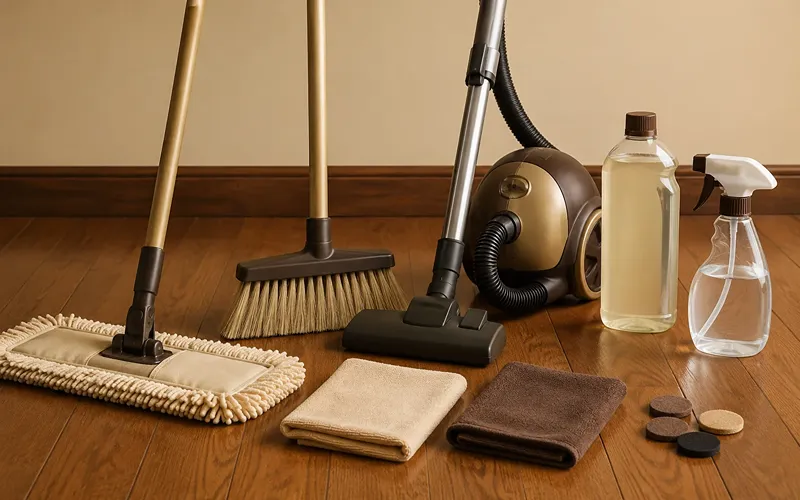
You don’t need a cupboard full of products. This short list covers everything:
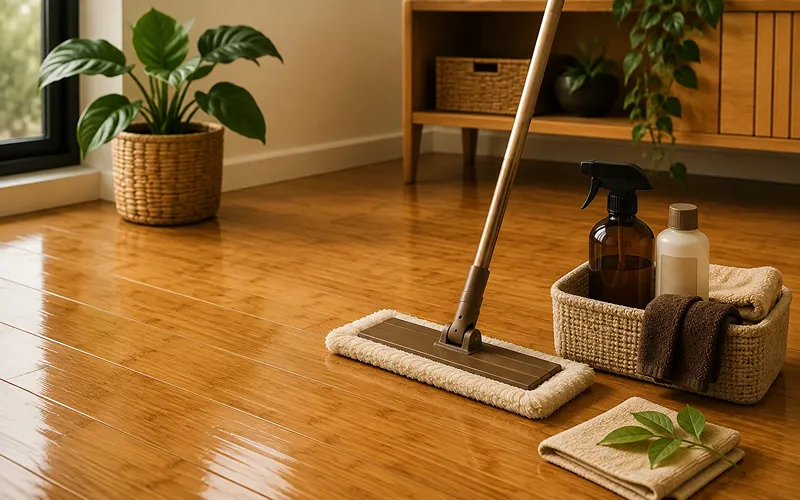
- Microfiber dust mop: Traps fine particles instead of pushing them around
- Soft-bristle broom: For quick daily sweeps
- Vacuum with a hard-floor setting: Beater bar switched off
- pH-neutral hardwood or bamboo floor cleaner: The single most important purchase
- Spray bottle: Controls how much liquid touches the floor
- Two soft cloths: One damp, one dry
- Felt pads: For furniture legs
Skip anything marketed as a “shine restorer” with wax in it. Those build up over time and leave you with a sticky film that attracts more dirt than it removes.
How to Clean Bamboo Flooring Step by Step
Step 1: Remove the grit before anything else
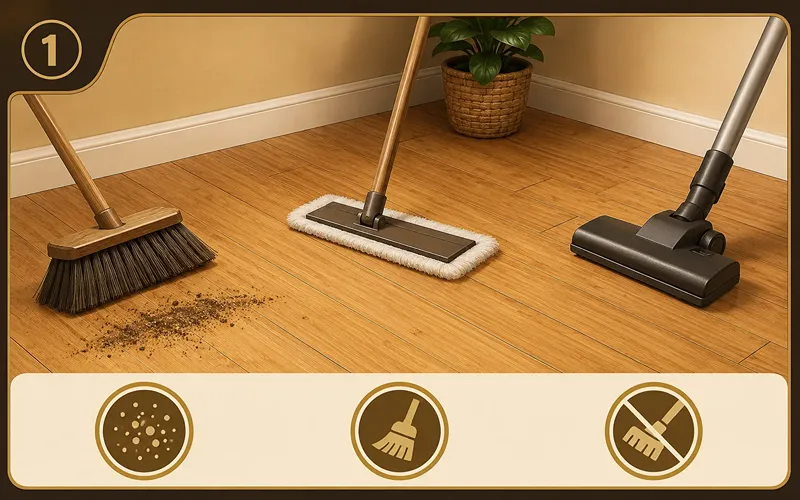
Dry dirt is abrasive. Every grain of sand tracked in from outside acts like fine sandpaper under a shoe, and dragging a wet mop over it grinds those particles straight into the finish.
Sweep or dust-mop first, working into corners and along skirting boards. If you’re vacuuming, use the hard-floor attachment and confirm the rotating brush is off, those bristles will scuff the surface on a soft plank.
Step 2: Choose and dilute your cleaner
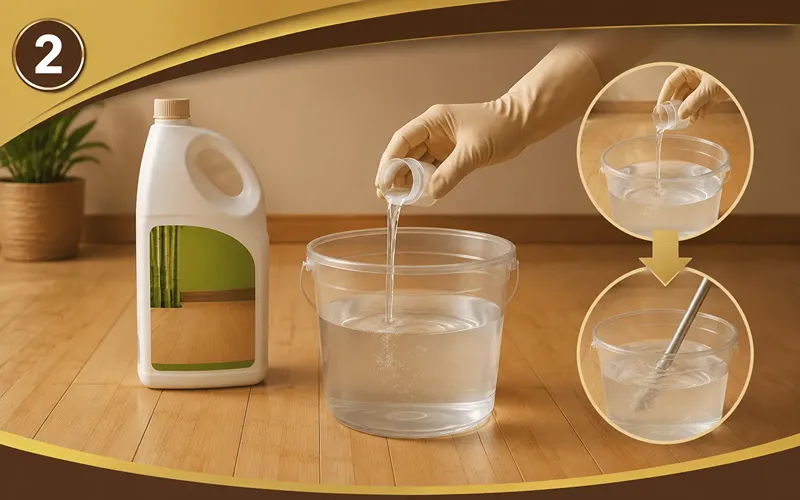
Reach for a cleaner labelled safe for sealed hardwood or bamboo specifically. Bona is the name most flooring manufacturers point to, though any residue-free, pH-neutral formula will do the job.
Follow the dilution instructions on the bottle exactly. Over-diluting sounds harmless but leaves you scrubbing longer, and under-diluting leaves film behind.
Step 3: Damp mop, never wet mop
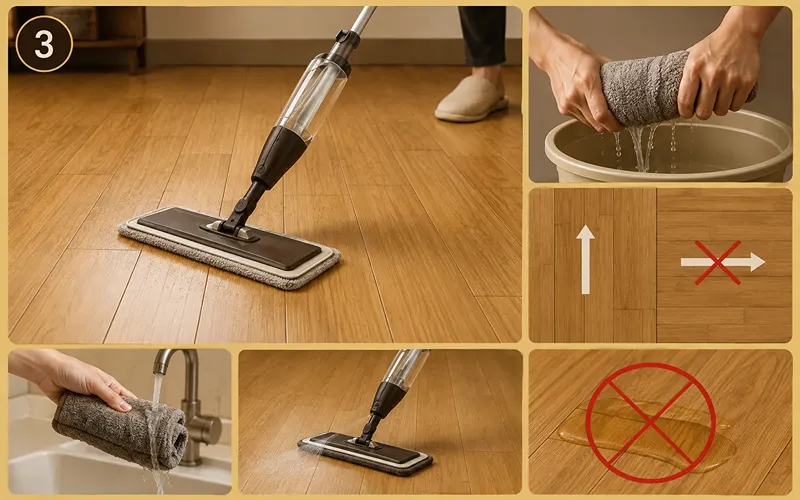
This is where most floors get ruined. Dip your microfiber pad, then wring it until it feels barely moist, not damp. If you can squeeze a drop out of it, wring again.
Work in sections, moving with the grain rather than across it. Rinse and re-wring the pad often so you’re lifting dirt off the floor instead of redistributing it. If you’re using a spray mop, mist a light film ahead of you rather than soaking one spot.
Puddles are the enemy. Water that sits in a plank seam for even a few minutes starts working its way into the core.
Step 4: Dry and buff
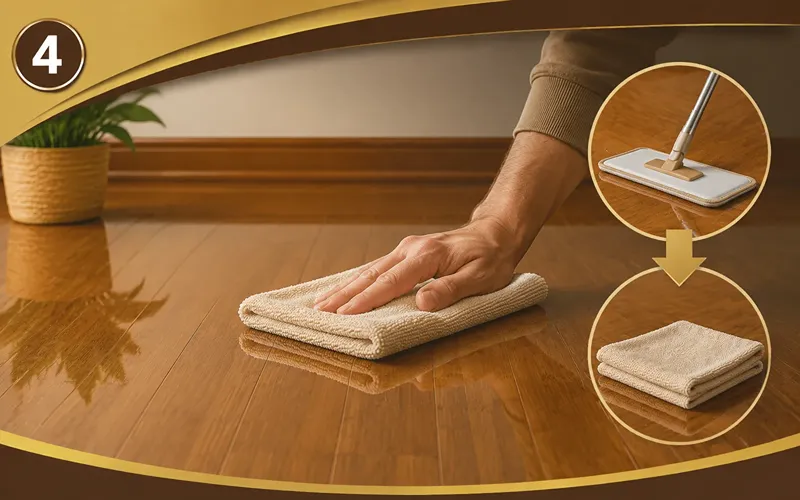
Go over the surface with a dry microfiber cloth or a clean dry pad, especially in low spots where liquid gathers. On glossy finishes, a final pass with a slightly damp water-only pad followed by drying removes any cleaner residue and brings the reflection back.
The whole floor should be dry within a minute or two of you finishing. If it isn’t, you used too much liquid.
Your Bamboo Floor Cleaning Schedule
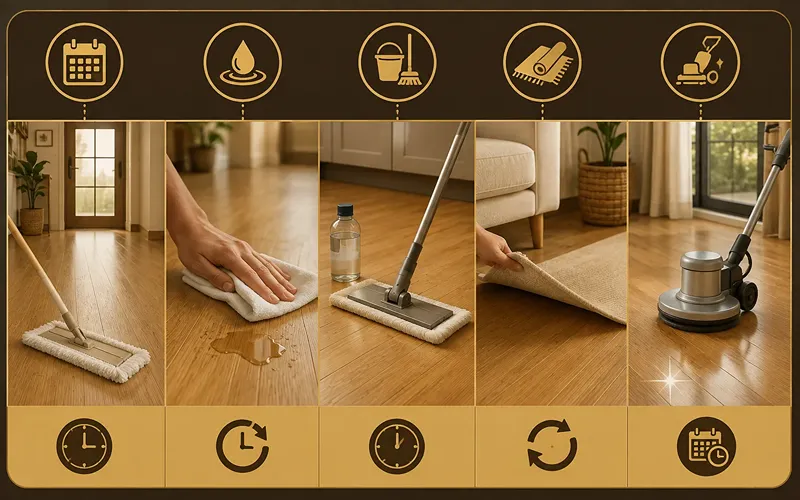
Consistency beats intensity here. A floor swept daily almost never needs aggressive cleaning.
Daily: Dust mop high-traffic paths, entryways, kitchen runs, hallways. Two minutes.
As it happens: Wipe spills immediately with a dry cloth, then a lightly dampened one. Don’t wait.
Weekly: Damp mop the full floor with your pH-neutral cleaner.
Monthly: Move rugs and lightweight furniture, clean underneath, and check for scuffs or wear patterns you’ve been walking past without noticing.
Every few years: Consider a professional screen-and-recoat if the finish looks worn rather than dirty. This refreshes the protective layer without full sanding.
Best Cleaner for Bamboo Floors
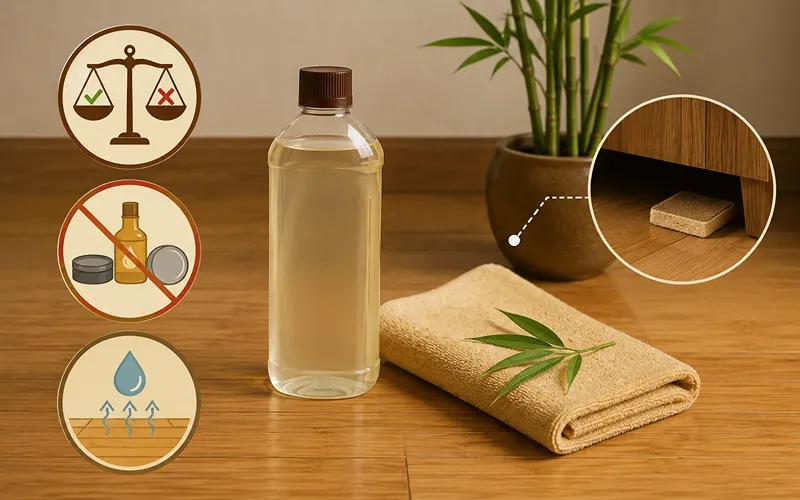
The label matters more than the brand. Look for three things:
- pH-neutral (around 7). Acidic and alkaline formulas both eat away at polyurethane over time.
- No wax, oil or polish. These promise instant shine and deliver long-term buildup.
- Residue-free and fast-drying. If it leaves a film, it’ll turn hazy under sunlight.
If a product says it’s safe for sealed hardwood, it’s generally safe for bamboo too. When in doubt, spot-test in a cupboard or under a sofa before committing to the whole room.
Is vinegar safe on bamboo floors?
This is the most argued-about question on the internet, and the honest answer sits in the middle.
Vinegar is acidic. Used regularly, it gradually dulls the finish, which is why most flooring manufacturers advise against it outright, and why some warranties specifically exclude damage from acidic cleaners.
That said, a heavily diluted solution used occasionally on a stubborn sticky patch won’t destroy your floor. If you go that route, mix roughly a quarter cup of white vinegar into a full gallon of warm water, use it for spot work only, and rinse the area with plain water afterwards.
For a gentler DIY option, a quarter teaspoon of mild, pH-neutral dish soap in a quart of warm water handles most grime without the acidity. Just wring the mop out thoroughly, soap residue is what makes floors feel tacky underfoot.
Bamboo Floor Cleaner Comparison: What’s Safe and What Isn’t
Most confusion around bamboo care comes from products that are perfectly fine on tile or vinyl and quietly destructive on a sealed bamboo finish. This table settles the common ones.
| Cleaner or method | Safe? | Recommended? | What actually happens |
| pH-neutral hardwood/bamboo cleaner | Yes | Best choice | Lifts dirt, evaporates fast, leaves no film |
| Plain water on a well-wrung microfiber pad | Yes | Yes, for light cleaning | Handles daily dust; no residue at all |
| Mild dish soap (¼ tsp per quart of water) | Mostly | Occasional use | Fine if rinsed; too much leaves a tacky film |
| Enzymatic pet cleaner | Yes | Yes, for accidents | Breaks down urine compounds instead of masking odour |
| Diluted white vinegar | Risky | No, spot use only | Acidic; repeated use gradually dulls the finish |
| Baking soda paste | Risky | Spot use only | Mildly abrasive; can scratch high-gloss surfaces |
| Rubbing alcohol | Risky | Spot use only | Lifts ink and crayon, but strips finish if rubbed hard |
| 3% hydrogen peroxide | Risky | Spot use only | Useful on mould patches; test in a hidden area first |
| Oil soaps (Murphy’s and similar) | No | No | Vegetable-oil base leaves a haze that streaks and builds up |
| Pine-Sol and multi-surface cleaners | No | No | Not pH-balanced for wood finishes; causes dull patches |
| Ammonia cleaners (Windex, many all-purpose sprays) | No | Never | Clouds and strips the protective coating |
| Bleach | No | Never | Discolours planks and permanently damages the finish |
| Wax, silicone or polish sprays | No | Never | Builds up, attracts dirt, blocks future recoating |
| Steam mop | No | Never | Forces hot moisture into the core; often voids the warranty |
What Never to Use on Bamboo Flooring?
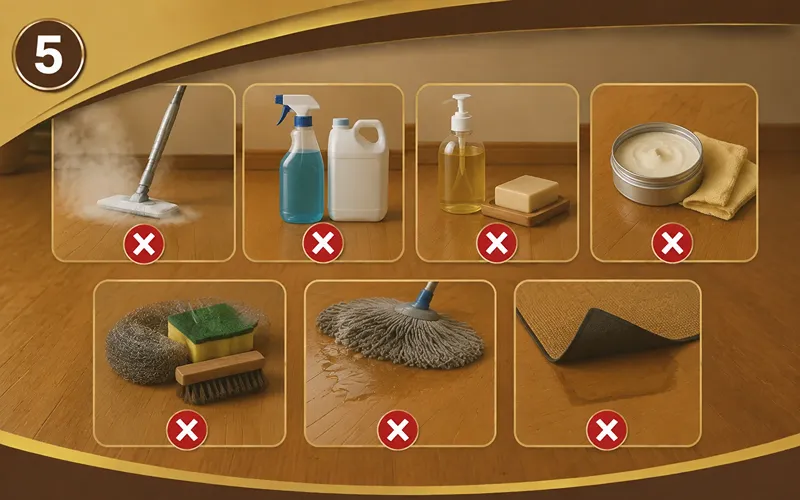
Save yourself an expensive repair by keeping these away from your planks:
- Steam mops. The single biggest cause of avoidable bamboo damage. Steam exceeds 100°C and forces moisture straight through the finish into the core, causing swelling, warping and, on engineered planks, delamination of the adhesive layers. Many manufacturers void the warranty outright if you use one.
- Ammonia-based cleaners and bleach. Strip and cloud the protective coating.
- Oil soaps. They leave a film that dulls the surface and eventually flakes off, creating twice the work.
- Wax and furniture polish. Bamboo doesn’t absorb wax the way old hardwood does, so it just sits there getting slippery and sticky.
- Steel wool, scouring pads and stiff brushes. Instant micro-scratching, particularly visible on high-gloss finishes.
- Wet mops and buckets of water. Standing water and plank seams don’t mix.
- Rubber or latex-backed mats. They trap moisture underneath and can discolour the floor in a perfect rectangle.
Removing Common Stains and Marks
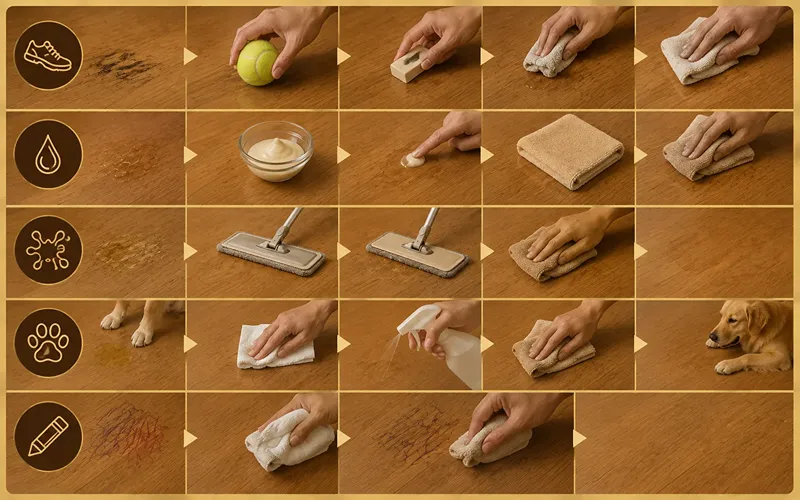
Scuff Marks
Sweep the area clean first so you’re not grinding debris in. Then rub gently with a clean tennis ball or a pencil eraser, the rubber lifts the mark without touching the finish. For stubborn ones, put a little hardwood cleaner on the corner of a microfiber cloth, work the spot lightly, then buff dry with a clean corner.
Water stains and Cloudy Patches
Fresh marks usually disappear once the area is fully dry and buffed. Older stains that have worked into the finish respond to a small amount of mayonnaise or petroleum jelly left on overnight, the oils draw trapped moisture out. Wipe away and polish in the morning.
Sticky or tacky Floors
Almost always residue, not dirt. Something you’ve used, soap, wax, an all-purpose spray, has left a layer behind. Rinse the whole floor with a barely damp water-only microfiber pad, changing the pad as it loads up, and dry immediately. Then switch to a residue-free cleaner going forward.
Pet Accidents
Move fast. Urine is both moisture and acid, which is the worst possible combination for bamboo. Blot it up with a dry cloth, clean the spot with a pet-safe enzymatic cleaner formulated to break down odour compounds, then dry thoroughly. Enzyme cleaners matter here because masking the smell leaves your pet returning to the same spot.
Marker, crayon and ink
Dab, don’t scrub, with a soft cloth lightly dampened with rubbing alcohol. Heavy pressure strips finish along with the stain.
How to Make Bamboo Floors Shine Again?
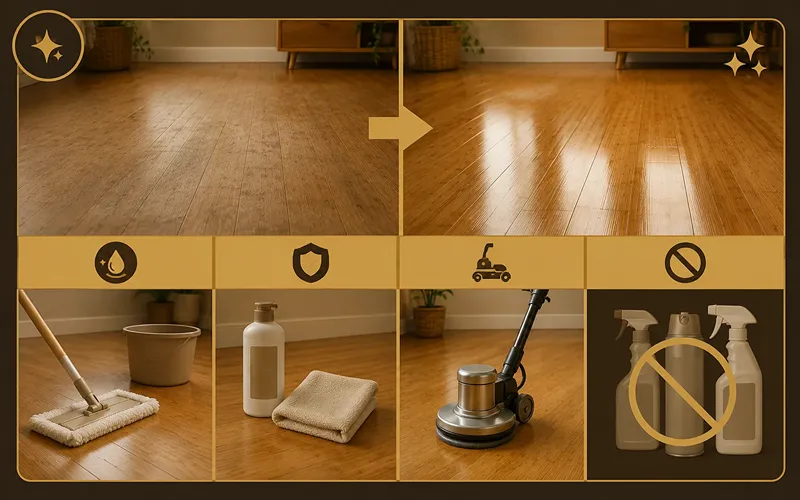
If your floor is clean but still looks flat, the shine problem is usually one of two things.
Residue buildup is the more common culprit, and it’s reversible. A thorough water-only rinse with a fresh microfiber pad, followed by immediate drying, often restores more gloss than any product will.
A worn finish is different. If the dullness follows your walking paths and doesn’t respond to cleaning, the coating itself has thinned. At that point you have two options: apply a bamboo-safe floor polish designed to renew the protective layer, or have the floor screened and recoated professionally. Screening lightly abrades the old coating and adds a fresh one without sanding down to raw material, cheaper and less disruptive than full refinishing.
Whatever you do, avoid silicone-based shine sprays. They look brilliant for a week and make future recoating a nightmare, because new finish won’t bond to silicone.
Everyday Habits That Protect the Finish
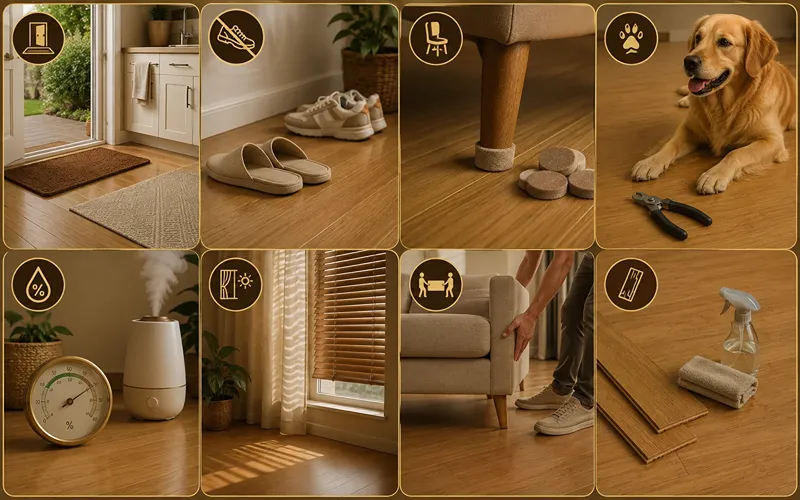
Prevention costs almost nothing and saves the most:
- Put doormats at every external door and a washable rug in front of the kitchen sink
- Make the floor a shoes-off zone, grit trapped in soles does more damage than anything you’ll spill
- Stick felt pads under every chair, table and sofa leg, and replace them when they wear thin
- Trim pet nails regularly
- Keep indoor humidity between 30% and 50%, a humidifier in dry winters, a dehumidifier in humid summers
- Use curtains or blinds on sun-facing windows; UV fades bamboo unevenly over time
- Never drag furniture, lift it, or slide it on proper glides
- Keep a few spare planks after installation, both for repairs and for testing new cleaning products
That last one is worth taking seriously. Testing an unfamiliar cleaner on a spare board costs nothing. Testing it on your living room floor could cost you a refinish.
Final Thoughts
Cleaning bamboo flooring comes down to three habits: keep the grit off, keep the water off, and keep the harsh chemicals off. A soft-bristle broom, a well-wrung microfiber mop and a pH-neutral cleaner will outperform any expensive gadget on the market.
Do that consistently and your floor won’t just stay clean, it’ll still be turning heads in twenty years, which is more than most flooring can promise.
Frequently Asked Questions
Can I use a Swiffer on bamboo floors?
The dry sweeper pads are fine and genuinely useful for daily dust. Wet Jet-style pads work too, provided you’re applying a light mist rather than saturating the boards. Check that the solution is pH-neutral first.
How often should bamboo floors be mopped?
Once a week is right for most homes. Busy households with children or pets may want twice weekly in high-traffic zones, but daily dust-mopping reduces the need for wet cleaning considerably.
Is bamboo flooring waterproof?
No. Some products are marketed as water-resistant for a limited window, 24 to 72 hours against surface spills, but that’s not the same as waterproof, and it certainly doesn’t mean steam-proof.
Why does my bamboo floor look streaky after mopping?
Either too much cleaner, too much water, or a mop pad that’s already dirty. Rinse with plain water, dry immediately, and wash your microfiber pads regularly without fabric softener.
Can bamboo floors be refinished?
Most solid and strand-woven bamboo can be sanded and refinished at least once, which means deep stains and scratches aren’t necessarily permanent. Thin-wear-layer engineered bamboo often can’t, check your manufacturer’s specification before assuming.
Do robot vacuums damage bamboo?
Generally no, as long as the model uses soft brushes rather than an aggressive beater bar. They’re actually excellent for keeping daily grit under control, which is the main threat to the finish.