Few things make a parent’s heart sink faster than watching a ball of homemade slime slip out of a kid’s hands and land right in the middle of the living room carpet. Whether it’s a fresh, gooey blob or a stain that’s been sitting there since yesterday’s craft session, the good news is that slime almost never has to become a permanent part of your flooring.
This guide by Floor Way walks you through proven, step-by-step methods for removing both wet and dried slime from carpet using things you probably already have under your kitchen sink. No expensive products, no guesswork, just a clear plan that actually works.
Why Slime Sticks to Carpet in the First Place?

Most homemade slime recipes rely on a mix of glue, water, and an activator like borax, contact lens solution, or liquid starch. Add in food coloring and glitter, and you’ve got a substance that’s sticky, stretchy, and, unfortunately, very good at wedging itself deep into carpets.
The glue component is what makes slime so clingy, while the dye is usually responsible for any leftover color stain once the sticky texture is gone. Knowing this helps explain why a two-step approach works best: first tackle the texture, then deal with the stain.
Before You Start: Do This First
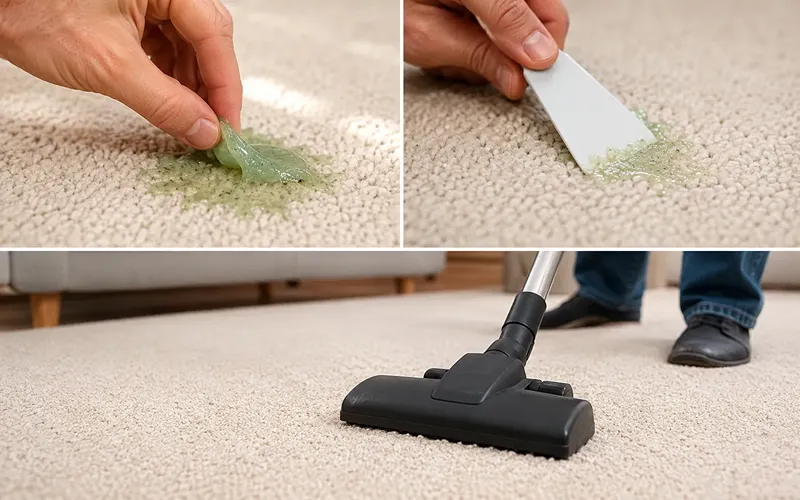
Regardless of which method you choose below, always begin with the same two steps:
- Remove as much slime as possible by hand or with a scraper. If it’s still wet, gently lift and pull it off the fibers with your fingers or a plastic spoon. If it’s dried, use a dull knife, plastic putty knife, or old credit card to scrape it away, working from the outer edge toward the center so you don’t spread it further.
- Vacuum the area. This picks up loose crumbs and small particles before you introduce any liquid, which prevents you from working residue deeper into the wall to wall carpet.
Only once the bulk of the slime is gone should you move on to a cleaning solution.
Quick Comparison: Which Method Should You Use?
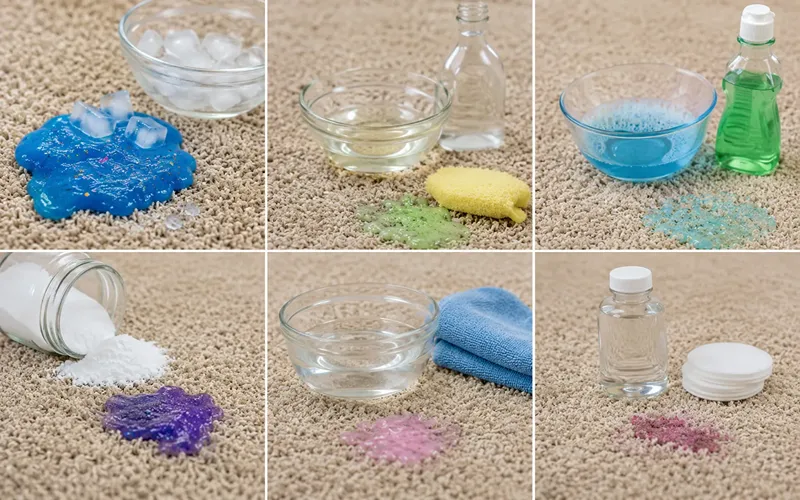
If you’re short on time, here’s a quick snapshot of each method to help you pick the right one.
| Method | Best For | Time Needed | Carpet Safety |
| Ice Cubes | Fresh or dried slime | 10-15 min | Safe for all carpet types |
| White Vinegar | Glue residue & lingering stains | 10-15 min | Test on dark or wool carpets first |
| Dish Soap | Fresh, wet slime | 5-10 min | Safe for all carpet types |
| Baking Soda | Sticky, slick residue | 10-15 min | Safe; vacuum well to avoid grit |
| Hot Water | Wet or dry slime, sensitive carpets | 10-20 min | Gentlest option overall |
| Rubbing Alcohol | Leftover dye/color stains | 5 min | Spot-test first; avoid on wool |
Use this table as a starting point, then follow the full step-by-step instructions below for the method that matches your situation.
Method 1: The Ice Cube Trick (Works on Fresh or Dried Slime)
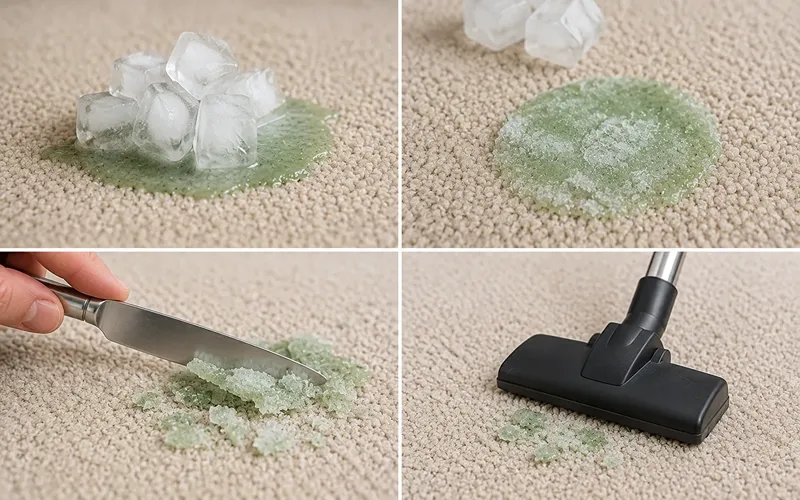
This is one of the simplest tricks in the book, and it works because cold temperatures make slime brittle and easy to break apart.
- Place a handful of ice cubes (or a sealed ice pack) directly over the slime.
- Let it sit for 10-15 minutes until the slime hardens completely.
- Once frozen, use a butter knife or spoon to gently chip and lift the hardened pieces away.
- Vacuum the loosened bits before moving to a stain-removal step if any discoloration remains.
This method is especially handy for slime that’s dried onto the sisal carpet overnight, since freezing makes even hardened globs easier to pop off the fibers.
Method 2: White Vinegar Solution
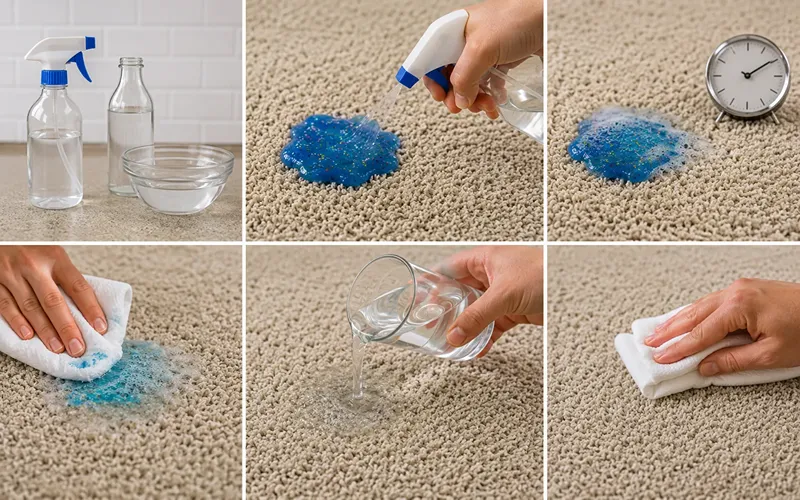
Vinegar is a favorite among carpet-cleaning pros because it breaks down the sticky polymers in glue-based slime without damaging most carpet fibers.
- Mix one part warm water with two parts white vinegar in a spray bottle.
- Lightly mist the affected area, don’t soak it.
- Let the solution sit for 5-10 minutes so it can loosen the residue.
- Blot (never scrub) with a clean white cloth or paper towel until the stain lifts.
- Rinse lightly with plain water and blot dry.
Blotting instead of rubbing matters here: rubbing pushes slime and dye further into the home carpets backing, making the stain harder to remove.
Method 3: Dish Soap Solution
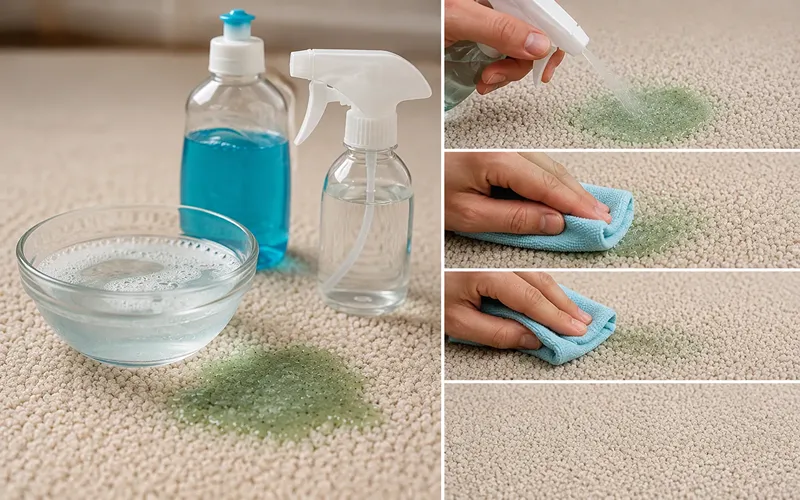
For slime that hasn’t fully dried, a simple dish soap mix can loosen the material before it has a chance to set.
- Combine one teaspoon of dish soap with one cup of warm water.
- Spray lightly over the stain and let it sit for about 5 minutes.
- Blot with a clean cloth, repeating until the slime lifts away.
This method pairs well with the ice cube trick, freeze and scrape first, then use dish soap to handle any leftover film.
Method 4: Baking Soda for Extra Grip
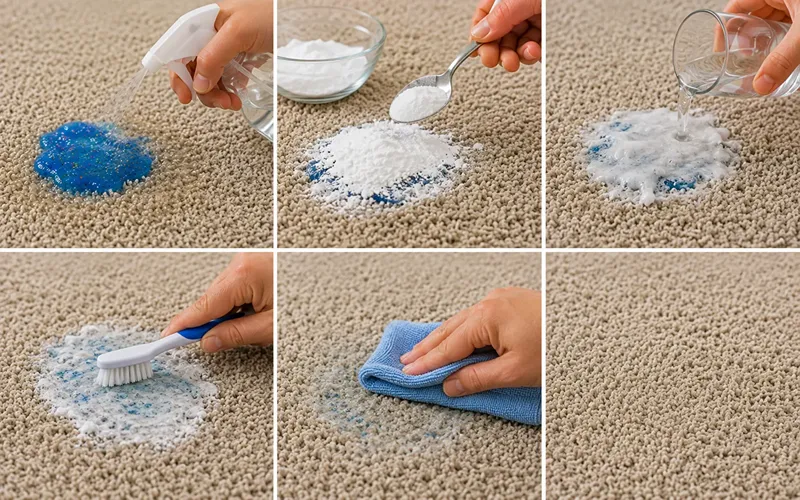
Baking soda is useful when slime feels especially slick or when vinegar alone hasn’t fully cut through the residue.
- Dampen the area slightly with water.
- Sprinkle baking soda generously over the spot.
- Add a bit more water on top and let it sit for a few minutes.
- Scrub gently with an old toothbrush or soft-bristle brush.
- Wipe clean with a damp towel, then dry thoroughly to avoid a gritty residue.
Method 5: Hot Water for Wet or Dry Slime

Since glue is water-soluble, hot water alone can work surprisingly well, especially on carpets where you want to avoid vinegar’s smell or a chemical cleaner.
- For wet slime: scoop up as much as possible with a spoon first.
- Dip a clean sponge or towel in hot (not boiling) water and blot the area, rinsing the cloth frequently.
- For dried slime: apply hot water directly to soften it before scraping and blotting.
- Once the stain is gone, absorb excess moisture with a dry towel.
Dealing With Leftover Color Stains

Bright, dyed, or glitter slime can leave a faint color stain even after the sticky texture is completely removed. If this happens:
- Apply a small amount of rubbing alcohol to a clean cloth and dab (don’t rub) the stained spot.
- Alternatively, a few drops of a natural citrus-based cleaner can help lift dye without bleaching the carpet.
- Always test any solution on a hidden patch of carpet first to make sure it won’t affect the color or texture.
When to Call a Professional Carpet Cleaner
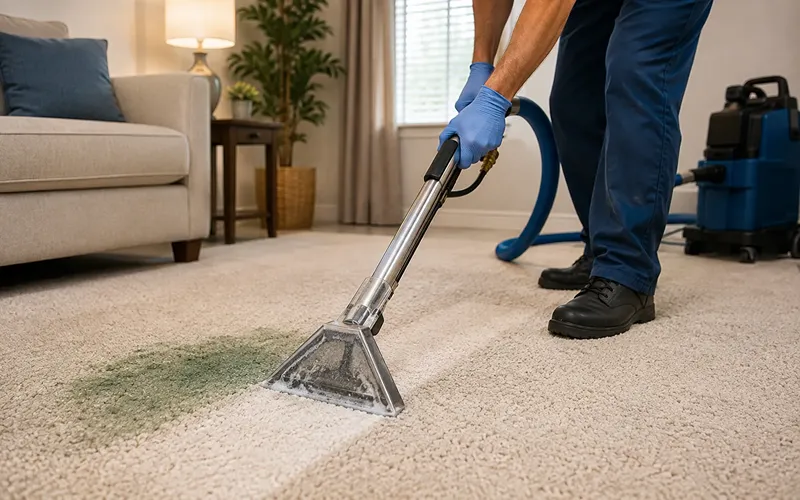
Most slime stains respond well to DIY methods, but if the stain has been sitting for a long time, covers a large area, or your carpet has a delicate or hand-woven texture, it may be worth calling in a professional. A steam cleaner or hot water extraction service can lift residue that’s worked its way deep into the padding, something home methods sometimes can’t fully reach.
How to Prevent Slime Stains in the Future
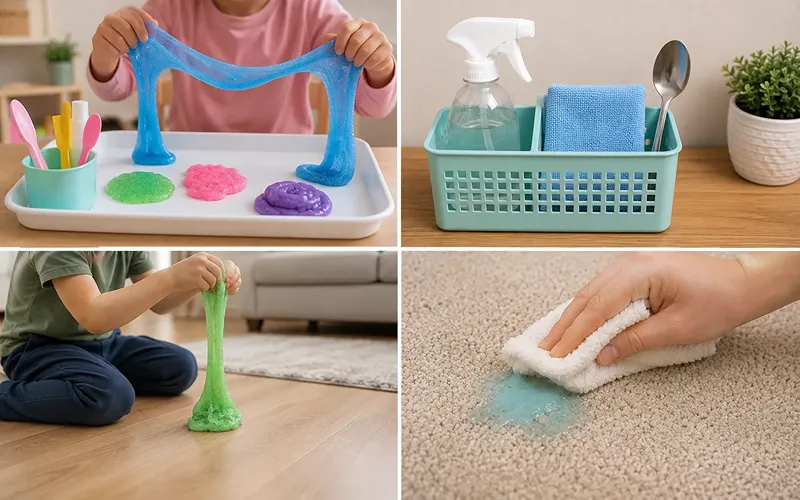
A little prevention goes a long way when slime is a regular part of playtime at home:
- Set a designated “slime zone” using a plastic tray, placemat, or washable mat.
- Keep a small cleaning kit (spoon, vinegar spray, cloth) nearby for quick action.
- Encourage kids to play with slime over hard flooring when possible.
- Treat spills immediately rather than letting them sit and dry.
Final Thoughts
A slime spill on the carpet feels like a disaster in the moment, but with the right technique, it’s almost always fixable. Start by removing as much slime as you can by hand, then choose the method, ice, vinegar, dish soap, baking soda, or hot water, that best matches how fresh or dried the stain is. With a little patience and the right approach, your carpet can look good as new, and the kids can get right back to their next slime creation.
Frequently Asked Questions
Does slime come out of carpet completely?
Yes, in almost all cases. The combination of scraping, freezing, and a mild cleaning solution like vinegar or dish soap removes both the sticky texture and most, if not all, of the color residue.
Can I use a regular carpet cleaner or foaming spray instead?
You can, though results vary. Some store-bought foaming cleaners work well on fresh stains but may leave residue behind on older, dried slime. Household methods like vinegar or ice are often just as effective and gentler on carpet fibers.
Is it better to treat slime wet or let it dry first?
Fresh, wet slime is generally easier to remove since it hasn’t had time to bond with the fibers. If you can’t get to it right away, freezing dried slime with ice before scraping is the next best approach.
What should I avoid doing when removing slime?
Avoid scrubbing or rubbing the area, applying hot water before scooping up excess wet slime first (it can make the remaining slime stickier and spread it further), and oversaturating the carpet, which can lead to mold or padding damage.