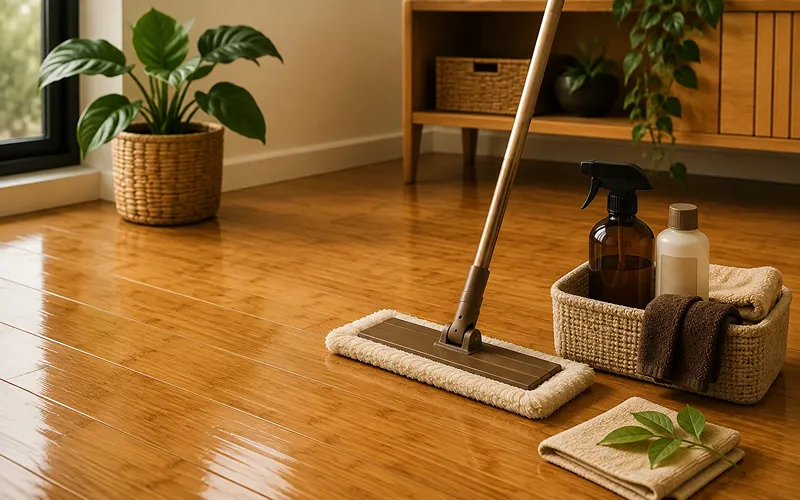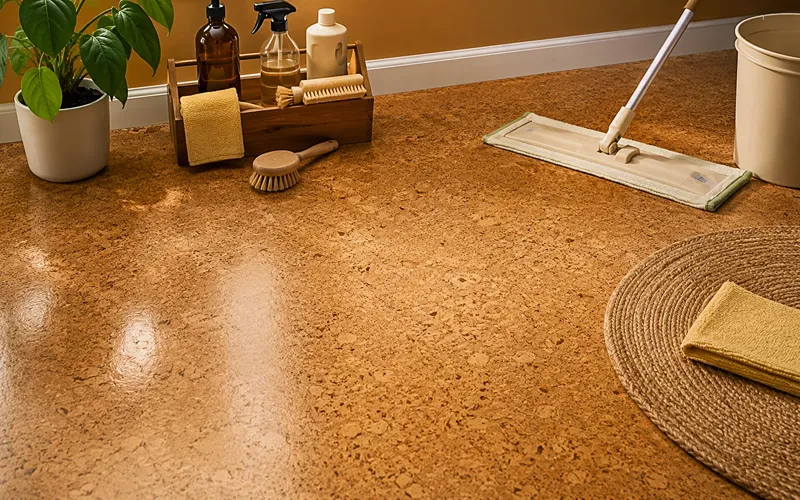
Cork flooring feels warm and soft underfoot, and it’s a popular choice in modern homes. But it doesn’t clean like hardwood or tile. This guide gives you a complete, safe routine: daily care, weekly mopping, stain removal, and the mistakes to avoid. It works whether you just installed cork flooring in Dubai or moved into a home that already has it.
The Safest Cork Cleaning Routine
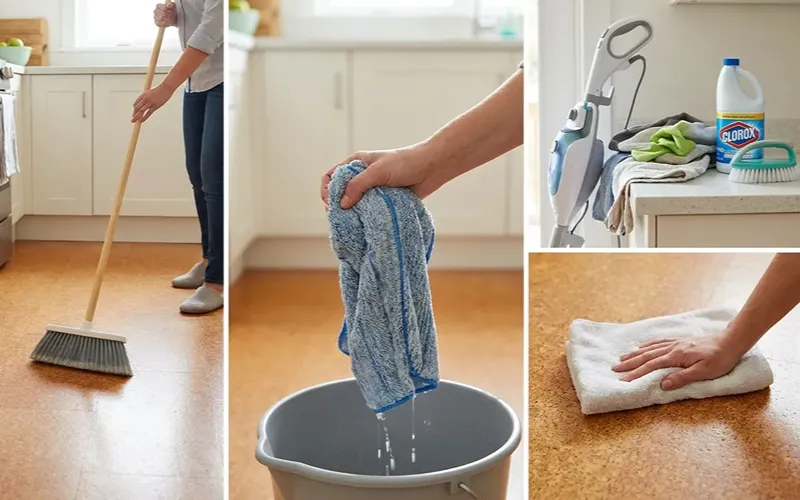
If you only remember one thing, remember this: keep it dry, keep it clean, keep it gentle.
- Sweep or vacuum (no beater bar) daily or every other day to clear grit
- Damp mop weekly with a pH-neutral, cork-safe cleaner, never a soaked mop
- Dry the floor immediately after mopping; never let water sit
- Avoid steam mops, ammonia, bleach, wax on the wrong finish, and abrasive scrubbers
- Always check your cork floor’s specific finish and your manufacturer’s care guide before choosing products
The sections below cover each of these in detail, plus stain removal, common problems, and when it’s worth calling in a professional.
What Makes Cork Flooring Different?
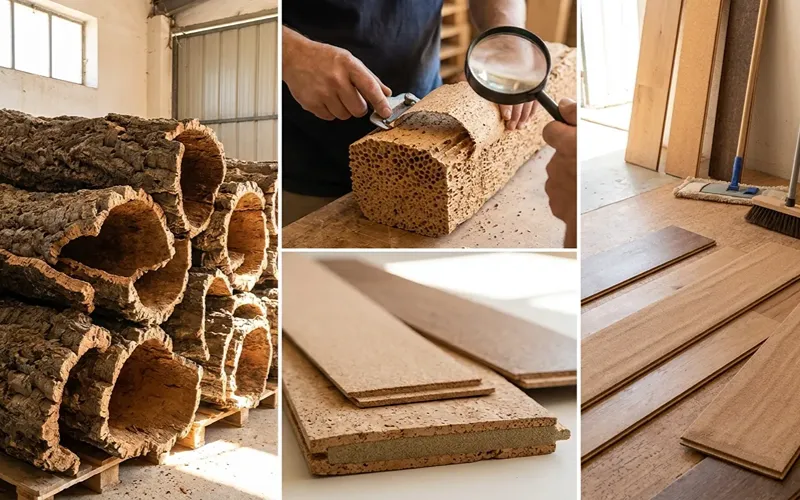
Cork comes from the bark of the cork oak tree. Its cellular structure is naturally porous, which gives cork that soft, cushioned feel underfoot. Most cork floors also have a protective sealant, usually polyurethane or wax, that helps resist dirt and moisture.
That seal doesn’t last forever, though. If water gets into the seams or a worn spot in the finish, the cork underneath can absorb it. Over time, this leads to moisture damage, swelling, warping, or discoloration. That’s why cork needs a gentler, drier cleaning approach than hardwood or laminate.
Check Your Cork Floor’s Finish First
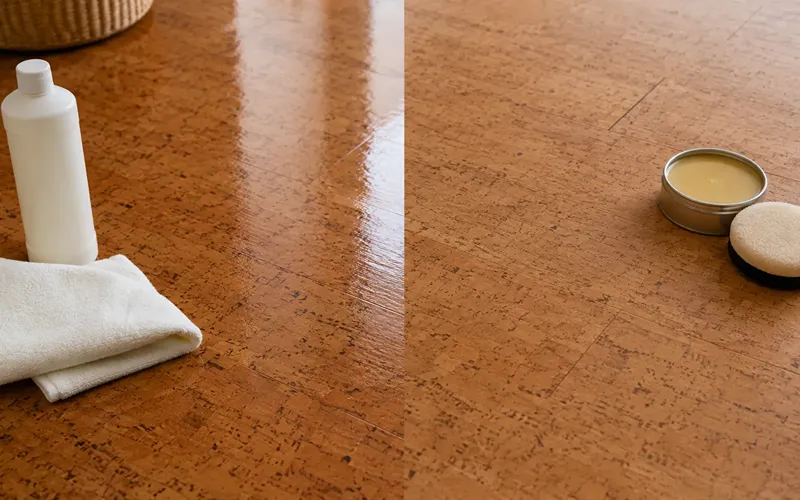
Before picking any cleaner or polish, confirm which finish your floor has. The right care approach depends on it.
- Polyurethane-sealed cork: Clean with a pH-neutral cleaner only. Never apply wax. If the surface looks dull, use a polish or restorer made specifically for polyurethane floors.
- Wax-finished cork: These floors can be re-waxed periodically to restore shine and protection, but still need gentle cleaning in between.
If you’re unsure which finish you have, check your installation paperwork or contact the manufacturer. Using the wrong product on the wrong finish is one of the most common, and most avoidable, causes of damage. As a general rule, always follow your flooring manufacturer’s specific care instructions and warranty guidelines, since they vary by product line.
What You Need to Clean Cork Flooring
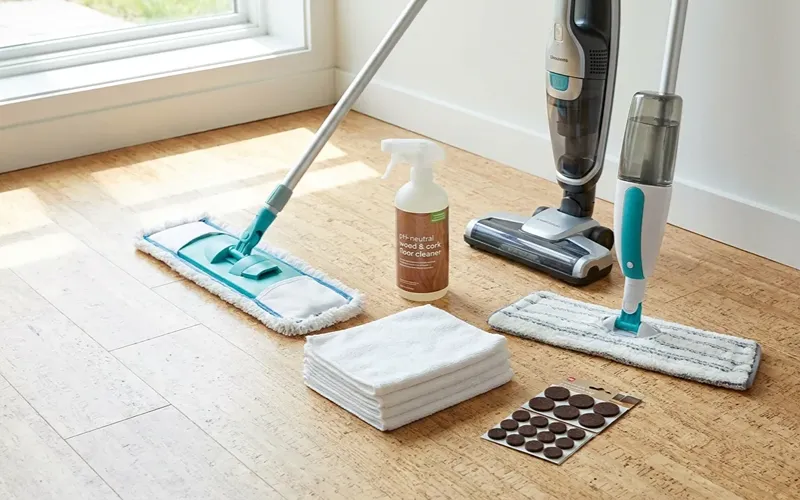
A basic toolkit covers nearly all routine cork floor care:
- Soft-bristle broom or microfiber dust mop
- Vacuum with a hard-floor setting and the beater bar switched off
- pH-neutral cleaner made for wood or cork floors
- Microfiber or spray mop
- Soft, clean cloths or towels
- Felt pads for furniture legs
How to Clean Cork Flooring Step by Step
Here’s the complete routine, from clearing dust to a fully dry floor.
Step 1: Remove Dust and Grit
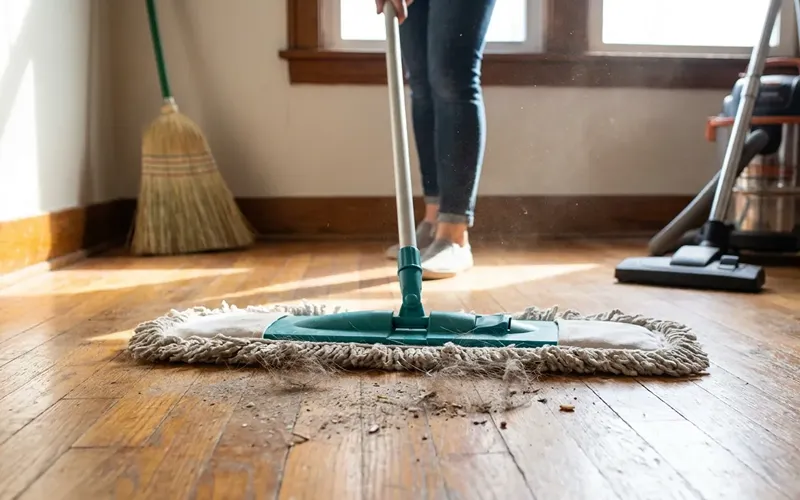
Sweep or vacuum first, always. Loose dirt acts like sandpaper underfoot. Clearing it before mopping stops it from grinding into the finish. Use a soft-bristle broom, a microfiber dust mop, or a vacuum on its hard-floor setting with the beater bar off.
Step 2: Choose a Suitable Cleaner
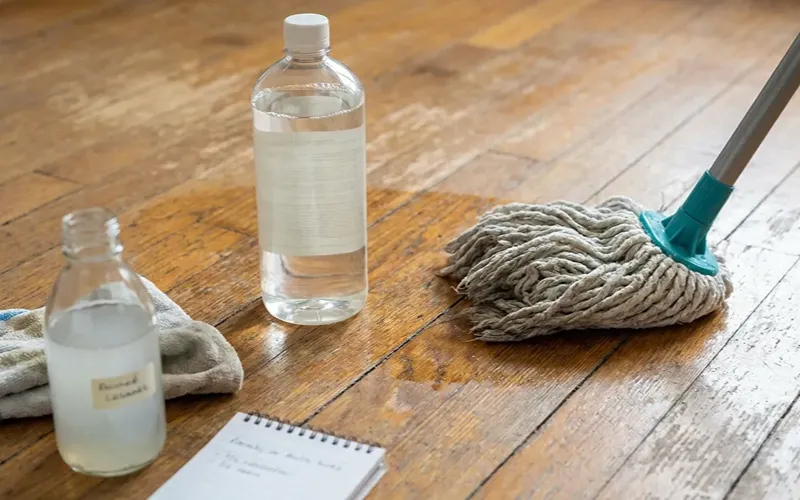
A pH-neutral cleaner made for wood or cork is the safest everyday choice. Some homeowners use a lightly diluted white vinegar solution instead. Treat this as an occasional method, not a daily one. Vinegar is acidic, and using it too often can dull some finishes. Whichever cleaner you pick, check that it suits your floor’s finish first.
Step 3: Damp Mop Without Over-Wetting
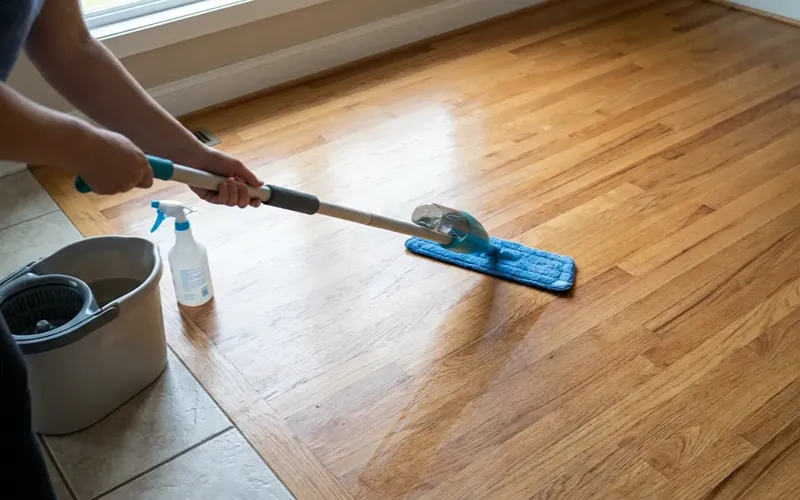
Dip a microfiber or spray mop into your cleaning solution, then wring it out well. It should feel almost dry, with no dripping. Mop in the direction of the tiles or planks, working in small sections so no area stays wet for long.
Step 4: Dry the Floor Properly
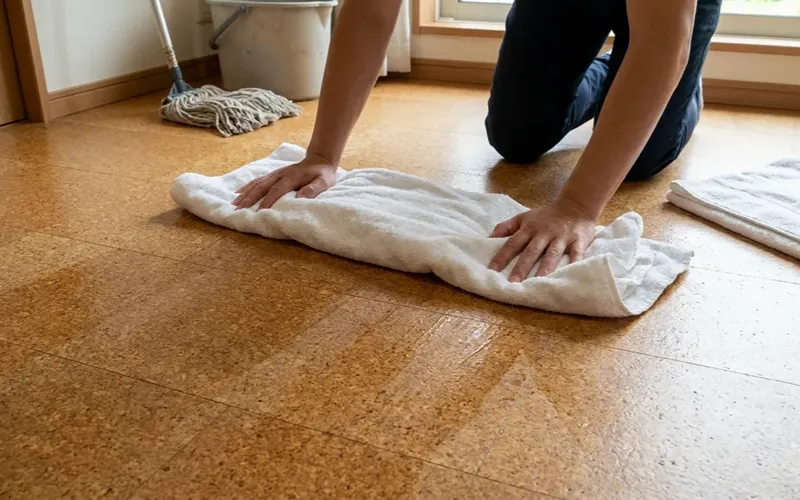
Go over any damp spots with a clean, dry towel right after mopping. The floor shouldn’t look wet once you’re done. Standing moisture, even for a few minutes, is the biggest risk to cork flooring.
How to Remove Common Stains and Marks
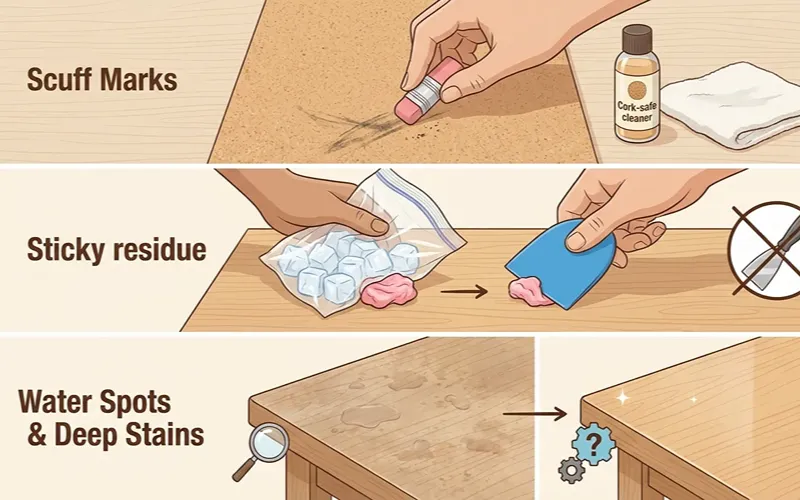
- Scuff marks: Gently rub with a standard pencil eraser. For tougher marks, apply a small amount of cork-safe cleaner to a soft cloth.
- Sticky residue (gum, crayon, food): Harden it first with an ice cube in a sealed bag, then scrape gently with a plastic scraper. Never use a metal tool, since it can gouge the surface.
For water spots, dullness, or deeper stains, see the troubleshooting section below.
Do vs. Don’t: Cork Floor Cleaning at a Glance
| Do | Don’t |
| Sweep or vacuum regularly with the beater bar off | Use a steam mop |
| Use a well-wrung, barely-damp mop | Let water pool or soak into the floor |
| Choose a pH-neutral, cork-safe cleaner | Use ammonia, bleach, or abrasive scouring powders |
| Dry the floor immediately after mopping | Leave spills sitting, even briefly |
| Use felt pads and lift furniture when moving it | Drag furniture across the floor |
| Match polish or wax to your floor’s actual finish | Use wax and polyurethane products interchangeably |
Cleaning Mistakes to Avoid
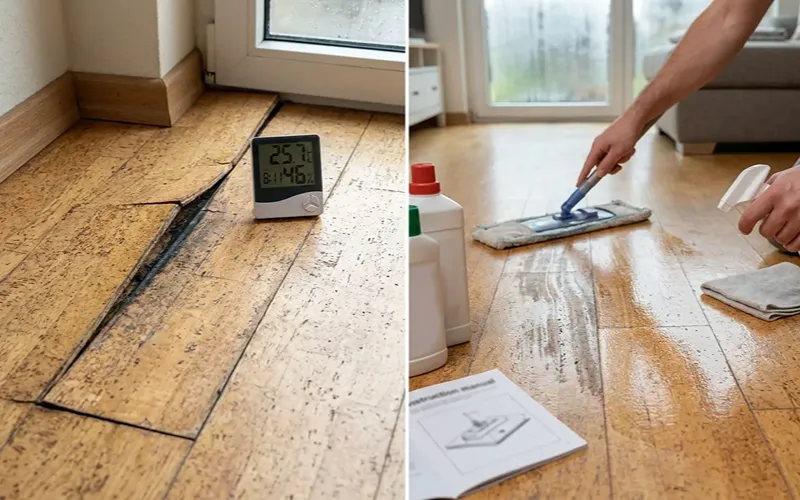
Beyond the table above, two habits are worth calling out on their own:
- Ignoring humidity swings. Cork is wood-based, so it expands and contracts as indoor humidity changes. Large swings can eventually cause gaps or slight buckling.
- Assuming one method fits every cork floor. Finish type, sealant condition, and manufacturer guidance all affect what’s actually safe for your specific floor.
How Often Should You Clean Cork Flooring?
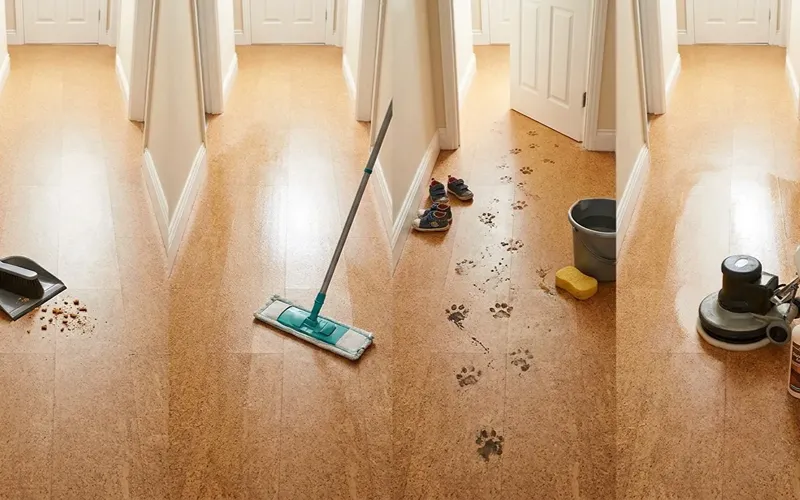
There’s no single fixed schedule. It depends on foot traffic, pets, and how often spills happen. As general guidance:
- Daily or every other day: Sweep or vacuum to control grit
- Weekly: Damp mop for average households
- Twice weekly: Damp mop if you have kids, pets, or heavy traffic
- Every few months: A deeper clean with a specialty cork or wood-floor cleaner
Adjust this based on how the floor looks and feels, and defer to your manufacturer’s recommended schedule where one is provided.
Preventive Care for Cork Floors
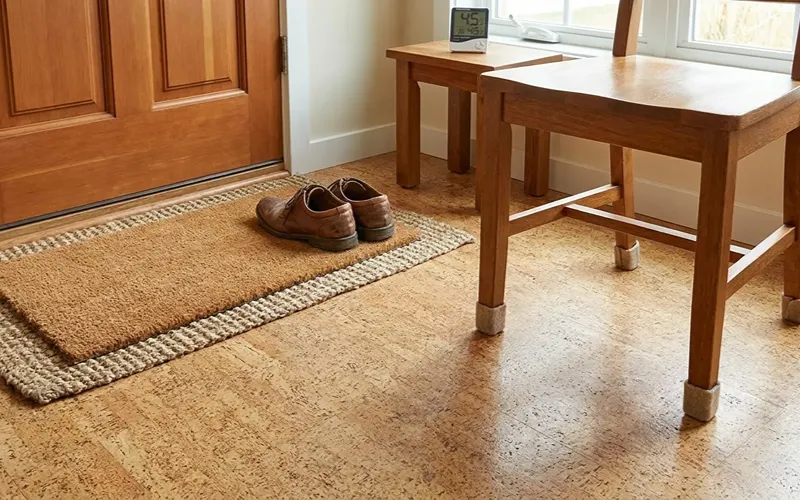
A few habits help prevent damage before it starts. Place walk-off mats at exterior doors to catch grit before it reaches the floor. Choose breathable-backed mats over rubber ones, since rubber can trap moisture underneath. Keep felt pads on furniture legs, and keep indoor humidity fairly stable, since cork expands and contracts with humidity like any wood-based material.
Troubleshooting and When to Call a Professional
| Problem | Try This First | Call a Professional If… |
| Dull, hazy finish | Clean with a pH-neutral cleaner; apply a finish-appropriate polish | Dullness persists after cleaning and polishing |
| Minor scratches | Light polish or restorer matched to your finish | Scratches go through the finish into the cork itself |
| Water spots or slight swelling | Dry the area immediately with towels and a fan | The cork feels soft, raised, or the swelling doesn’t settle |
| Persistent odor | Clean and fully dry the area; check for hidden moisture | Odor continues or you suspect moisture trapped beneath the surface |
| Deep or set-in stains | Spot-clean gently with a cork-safe cleaner | The stain remains after cleaning, sanding and refinishing may be needed |
When in doubt, especially with swelling, warping, or stains that don’t respond to gentle cleaning, it’s worth consulting a flooring professional. This is safer than risking further damage with DIY sanding or refinishing.
Conclusion
Caring for cork flooring comes down to a few consistent habits: clear grit before it’s ground in, mop with minimal water, dry promptly, and match your products to your floor’s actual finish. Follow the step-by-step routine above, watch for the troubleshooting signs, and bring in a flooring professional for anything beyond routine care. With the right approach, cork flooring stays comfortable and good-looking for years.
FAQs
Can I use a steam mop on cork floors?
No. The heat and moisture from a steam mop can push water into the seams of the flooring. Over time, this can cause swelling or warping. A well-wrung damp mop is the safer choice.
Is vinegar safe for cork flooring?
It can work as an occasional natural cleaner if well diluted, but it’s acidic. Frequent use may dull some finishes over time. For daily cleaning, a pH-neutral commercial cleaner is the safer bet.
My cork floor looks dull. Can I use wax?
Only if your floor actually has a wax finish. Polyurethane-sealed floors should never be waxed; use a polish designed for polyurethane instead. Confirm your finish type before applying anything.
What should I do if water is accidentally left on the floor?
Dry it immediately with a clean towel, and use a fan to speed up drying in that spot. The longer moisture sits, the greater the risk of damage.