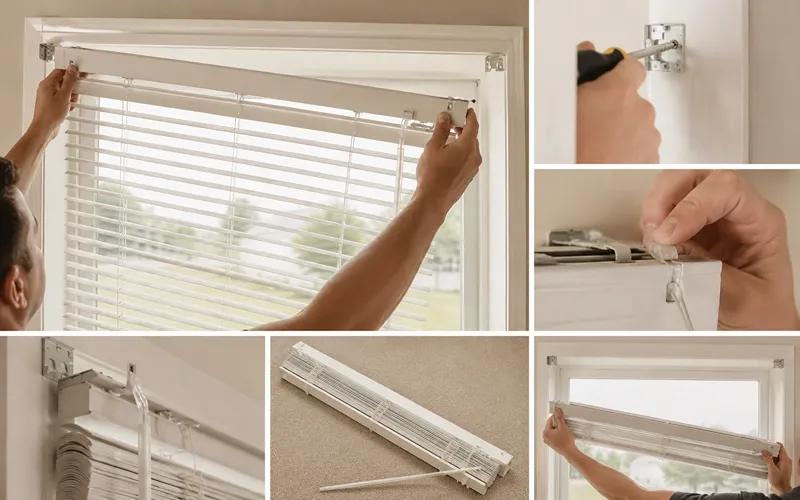
Blinds quietly collect more dust than almost anything else in your home. Between the horizontal slats, the folds of fabric shades, and the tight cells of honeycomb shades, dust, pollen, grease, and pet hair build up fast, and most people don’t notice until the blinds look gray instead of white. The good news is that cleaning blinds properly doesn’t require expensive products or hours of scrubbing. It just requires the right method for the right material.
This guide by Floor Way walks through simple weekly maintenance, deep-cleaning techniques, and material-specific instructions for every common type of blind, so you can keep them looking new without damaging them.
Why Window Blinds Get Dirty Faster Than You Think
Blinds sit directly in the airflow of a window, which makes them a magnet for airborne dust, cooking grease (especially in kitchens), pollen, and static-attracted particles. Horizontal slats trap dust on their top edges, while fabric and cellular shades hold onto allergens inside their folds. Left uncleaned, this buildup doesn’t just look bad, it can affect indoor air quality and even shorten the lifespan of the blinds themselves. Regular light cleaning prevents the kind of heavy, greasy buildup that eventually requires a full deep clean.
Blinds Cleaning Tools and Supplies You’ll Need
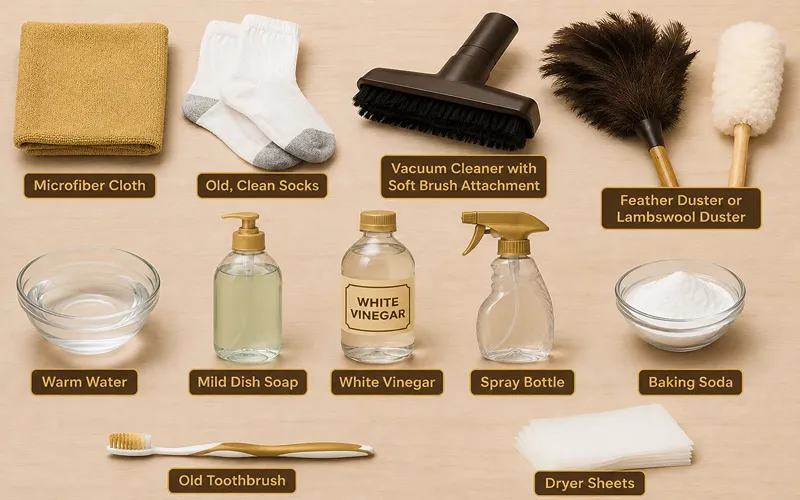
Before you start, gather a few basic items. Almost everything on this list is already in your home:
- A microfiber cloth or a couple of old, clean socks
- A vacuum cleaner with a soft brush attachment
- A feather duster or lambswool duster (great for wood blinds)
- Warm water
- Mild dish soap
- White vinegar
- A spray bottle
- Baking soda (for stubborn stains)
- An old toothbrush (for tight corners and cords)
- Dryer sheets (an underrated trick for reducing static and repelling dust)
With these on hand, you’re ready to tackle blinds of any material.
Weekly Blinds Maintenance to Prevent Dust Build-up
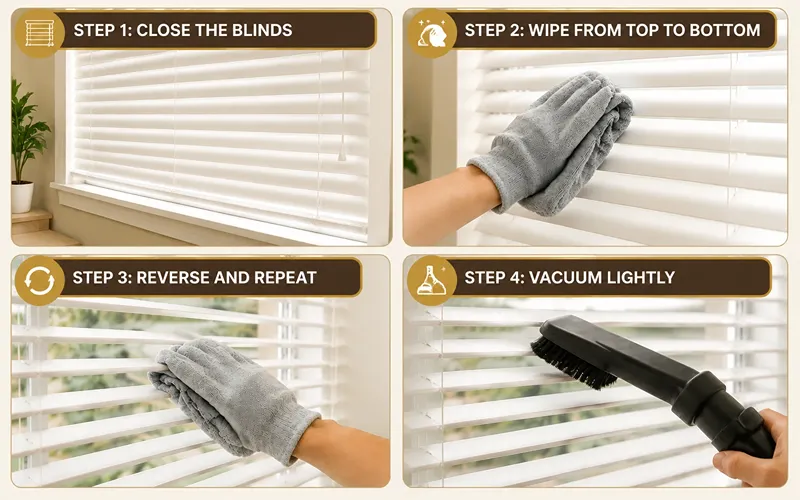
For blinds that just need routine upkeep, this simple approach takes only a few minutes and prevents dust from ever building up into grime.
Step 1: Close the blinds. Closing the slats gives you one continuous flat surface to wipe, which is far more efficient than cleaning each blade individually.
Step 2: Wipe from top to bottom. Using a microfiber cloth or a sock over your hand, wipe across the slats in one direction, starting near the headrail and working down. For vertical blinds, wipe side to side instead.
Step 3: Reverse and repeat. Tilt the blinds the opposite way and wipe again to catch the other side of each slat.
Step 4: Vacuum lightly. Run a vacuum with a brush attachment over the blinds to pick up any loosened dust before it settles on your windowsill or floor.
Doing this once a week keeps blinds looking fresh and dramatically cuts down on the need for deep cleaning later.
How to Clean Venetian (Horizontal Slat) Blinds
Venetian blinds is the umbrella term for classic horizontal-slat blinds, which are typically made from vinyl, wood, faux wood, or aluminum. The cleaning method depends on which material you have, since each one reacts differently to moisture.
Vinyl and Plastic Blinds
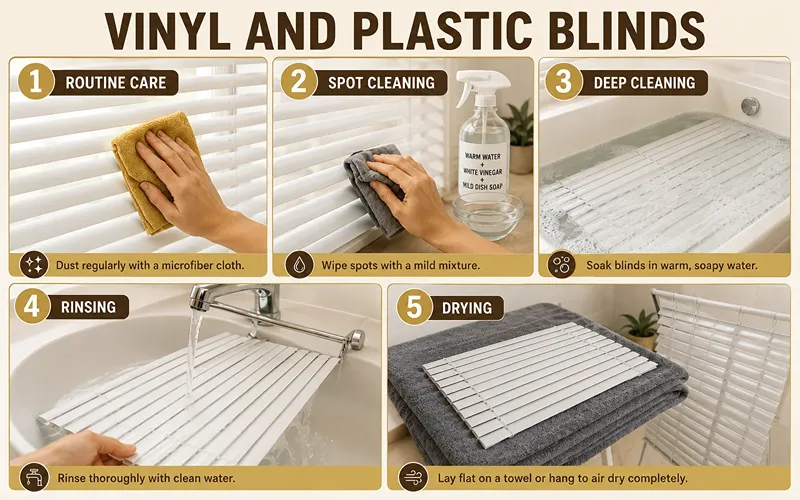
Vinyl and plastic (PVC) blinds are the easiest to clean because they can handle moisture without warping.
- Routine care: Dust with a dry microfiber cloth to remove loose debris before introducing any liquid.
- Spot cleaning: Mix equal parts warm water and white vinegar in a spray bottle with a small squirt of mild dish soap. Spray the solution onto a cloth or sock, not directly onto the blinds, and wipe each slat individually.
- Deep cleaning: For heavily soiled blinds, take them down and soak them in a bathtub of warm, soapy water for five to ten minutes.
- Drying: Rinse thoroughly with clean water, then lay them flat on towels or hang them to air-dry completely before rehanging.
Vinegar is particularly effective here because it cuts through the light film of grease that tends to build up on plastic blinds near kitchens.
Wood and Faux Wood Blinds
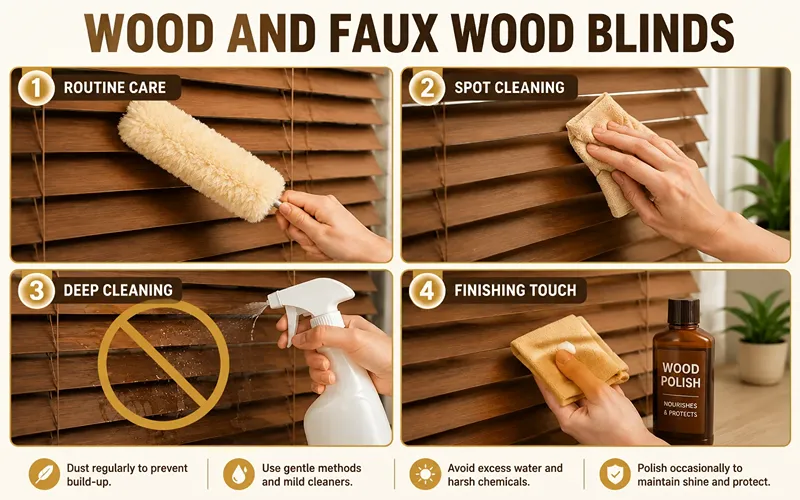
Real wood blinds are the most delicate type and require a dry approach, water is the enemy of wood.
- Routine care: Dust weekly using a soft microfiber cloth, a lambswool duster, or a dryer sheet, which has the added benefit of reducing static so dust doesn’t resettle as quickly.
- Spot cleaning: Lightly dampen a cloth, barely moist, not wet, and wipe each slat individually, drying immediately afterward with a dry cloth.
- Deep cleaning: Never soak wood blinds or use excess liquid on them, as this can cause warping, cracking, or discoloration. Stick to the dry and barely-damp methods above instead.
- Finishing touch: Every month or two, finish with a small amount of wood polish on a soft cloth to protect the finish and keep the wood looking rich.
Faux wood blinds are more forgiving and can tolerate a slightly damp cloth or the same vinegar solution used for vinyl blinds, but always check the manufacturer’s instructions first.
Aluminum and Metal Mini Blinds
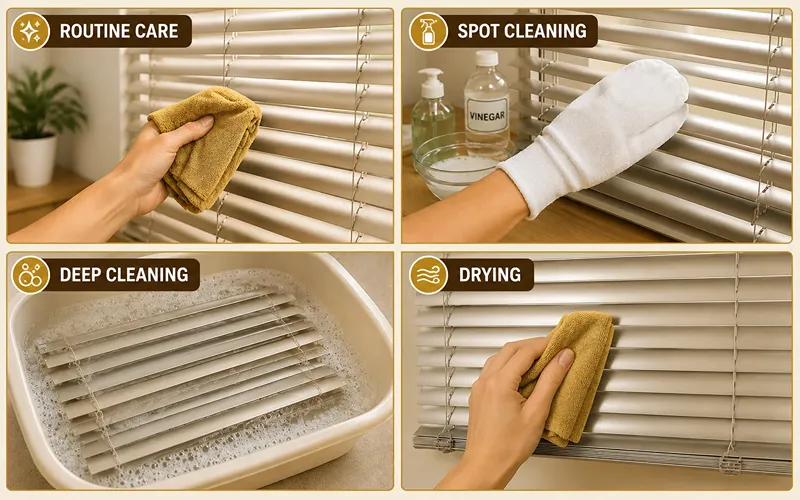
Metal mini blinds are sturdy but tend to bend easily if handled roughly, so a gentle touch matters here.
- Routine care: Dust with a microfiber cloth or duster, working slat by slat.
- Spot cleaning: Mix warm water with a little dish soap or a 50/50 vinegar-and-water solution. Slip a clean sock over your hand, dip it in the solution, and run your fingers along each slat to clean both sides at once.
- Deep cleaning: For very dirty aluminum blinds, remove them and soak in a tub of soapy water for a few minutes before rinsing.
- Drying: Wipe each slat with a cloth dampened in clean water to remove soap residue, then air-dry fully before rehanging.
This sock method works especially well because it lets you clean the top and bottom of each slat in a single pass.
How to Clean Roller Blinds
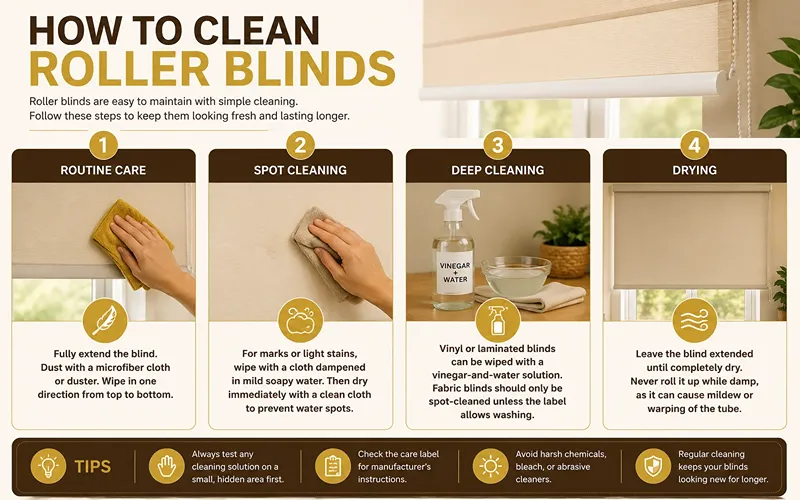
Roller blinds have a single flat sheet of fabric or vinyl that rolls up around a tube, which actually makes them one of the easiest types to clean.
- Routine care: Dust with a microfiber cloth or duster while the blind is fully extended, wiping in one direction from top to bottom.
- Spot cleaning: For marks or light stains, wipe with a cloth dampened in mild soapy water, then dry immediately with a clean cloth to prevent water spots.
- Deep cleaning: Vinyl or laminated roller blinds can usually handle a light wipe-down with a vinegar-and-water solution. Fabric roller blinds should only be spot-cleaned unless the label specifically allows washing.
- Drying: Leave the blind extended until completely dry before rolling it back up, since rolling it damp can cause mildew or warping of the tube.
How to Clean Vertical Blinds
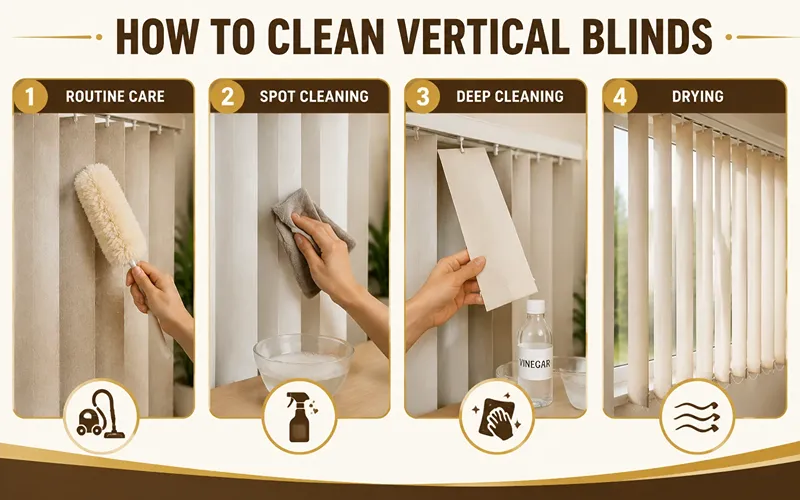
Vertical blinds use hanging fabric or vinyl vanes, which means dust settles differently than on horizontal slats and cleaning is usually done panel by panel.
- Routine care: Close the vanes flat and wipe each one from top to bottom with a microfiber cloth or duster, then vacuum with a brush attachment.
- Spot cleaning: For vinyl or PVC vanes, wipe with a cloth lightly dampened in a mild soap-and-water solution. Fabric vanes should be spot-treated by blotting rather than rubbing.
- Deep cleaning: Vinyl vanes can often be unclipped and wiped down individually, or wiped in place with the same vinegar solution used for horizontal vinyl blinds. Fabric vanes are usually dry-clean only, so check the label before applying any liquid.
- Drying: Let vanes air-dry fully while still hanging so they retain their shape and don’t develop creases.
How to Clean Fabric Blinds
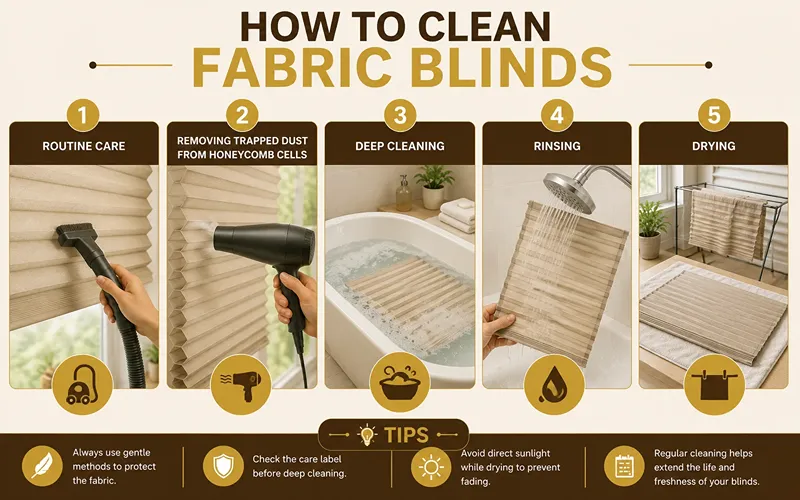
Fabric blinds, along with cellular (honeycomb) shades, trap more dust than most other types because of their soft, layered construction and hidden folds.
- Routine care: Vacuum regularly with a soft brush attachment, moving gently over the surface so you don’t flatten or crush the fabric.
- Removing trapped dust from honeycomb cells: Point a hair dryer on a cool, low setting into the cells to blow dust loose, then vacuum up what falls out.
- Deep cleaning: If the fabric can be safely removed and submerged, fill a bathtub with warm water and a small amount of mild dish soap. Let it soak for about an hour, then gently blot any stains with a soft sponge.
- Drying: Rinse thoroughly, then lay the shade flat on towels or hang it to air-dry completely before rehanging.
Always check the manufacturer’s care label first, some fabric shades are dry-clean only and shouldn’t be soaked at all.
How to Clean Roman Blinds
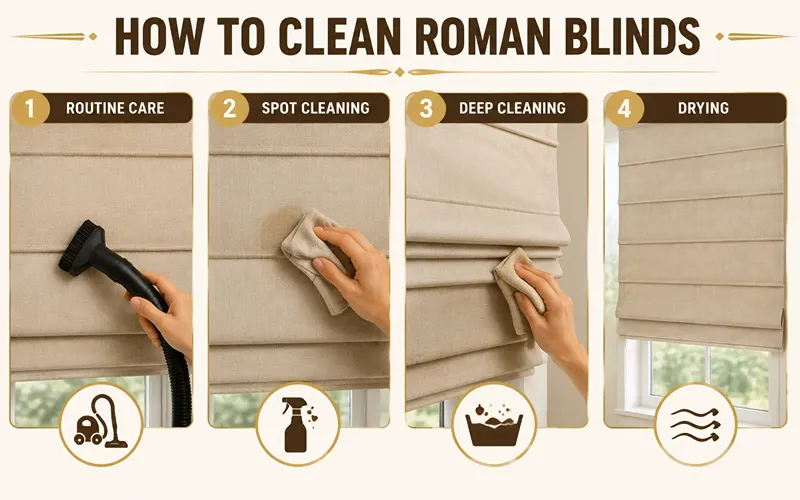
Roman blinds fold into soft horizontal pleats when raised, which means dust tends to settle inside the folds rather than just on the surface.
- Routine care: Vacuum with a brush attachment, working along each fold from top to bottom while the blind is lowered flat.
- Spot cleaning: Blot stains gently with a cloth dampened in mild soapy water rather than rubbing, which can push the stain deeper into the weave.
- Deep cleaning: Most Roman blinds are not meant to be fully submerged, since soaking can cause the fabric to shrink unevenly or the folds to lose their shape. Spot cleaning or a light hand-wash of removable panels is usually the safer route.
- Drying: Let the blind dry fully in its lowered, flat position so the pleats reset naturally instead of drying wrinkled or misshapen.
Because Roman blinds are prone to shrinkage and shape loss, professional cleaning is often worth considering for a full deep clean.
How to Clean Pleated Blinds
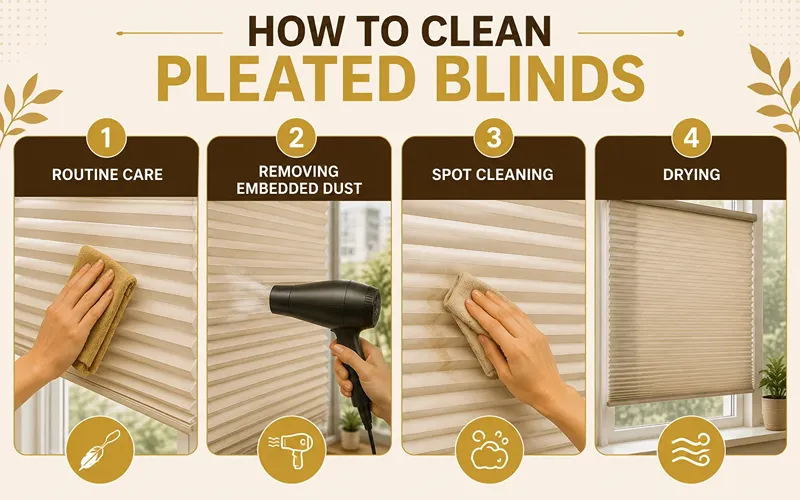
Pleated blinds share some traits with cellular shades but are made of a single layer of accordion-folded fabric rather than double-cell construction.
- Routine care: Dust with a microfiber cloth or duster, running along each pleat individually, or use a vacuum brush attachment on a low, gentle setting.
- Removing embedded dust: A cool hair dryer setting works well here too, helping loosen dust caught in the tight folds before vacuuming it away.
- Spot cleaning: Treat stains with a barely damp cloth and mild soap, blotting rather than scrubbing to avoid crushing the pleats.
- Drying: Keep the blind extended while it dries so the pleats hold their crisp shape.
Since pleated blinds are lightweight and closely folded, to avoid heavy soaking, excess moisture can cause the pleats to sag or lose their crease over time.
Removing Tough Stains and Grease Buildup
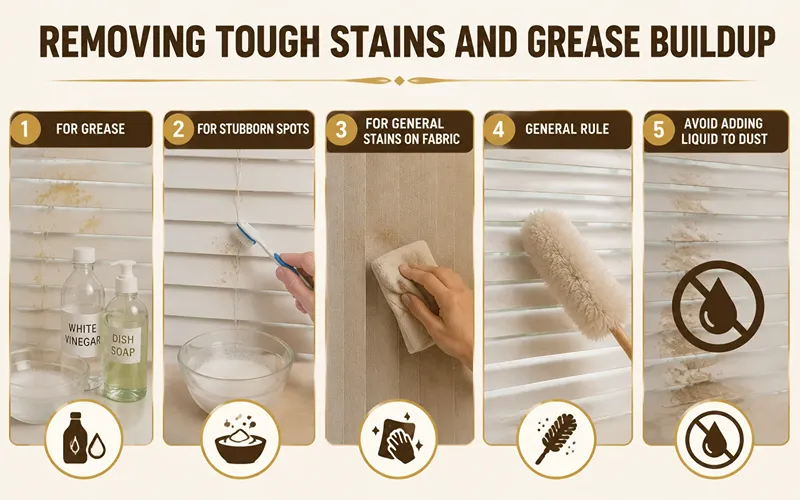
Kitchen blinds often deal with grease splatter, which plain dusting won’t remove.
- For grease: Mix warm water with a tablespoon of white vinegar or a stronger dish soap solution. Vinegar breaks down cooking residue, while dish soap lifts general grime.
- For stubborn spots: Make a light paste with baking soda and water, apply it gently with an old toothbrush, then wipe clean with a damp cloth.
- For general stains on fabric: Blot rather than rub, using a cleanser suited to the material, and avoid soaking the fabric excessively.
- General rule: Always dry-dust before introducing any liquid. Adding water directly to dust turns it into a paste that’s harder to remove and can smear rather than lift away.
Preventing Dust Buildup Between Cleanings
A few small habits go a long way toward keeping blinds cleaner for longer:
- Wipe blinds down with a dryer sheet occasionally, it reduces static cling so dust doesn’t stick as easily.
- Change your HVAC air filter regularly, since a clogged filter recirculates more dust into the air.
- Keep windows closed on high-pollen days if your blinds are still drying from a recent cleaning.
- Add a quick weekly dusting to your regular cleaning routine instead of waiting for visible buildup.
When to Replace Instead of Clean
Sometimes cleaning isn’t enough. Consider replacing your blinds if you notice permanent yellowing or warping, slats that are cracked or bent beyond repair, mechanisms (cords or tilt wands) that no longer work smoothly, or persistent odors that cleaning doesn’t resolve. In these cases, no amount of scrubbing will restore them, and a replacement is more practical.
Final Thoughts
Clean blinds make an entire room look brighter and better maintained, and the process is far simpler once you know which method fits your specific blind material. Stick to dry dusting for wood, use vinegar-based solutions for vinyl and metal, and reserve soaking for fabric and plastic blinds that can handle moisture. Paired with a quick weekly wipe-down, these techniques will keep your blinds dust-free, stain-free, and in good shape for years.
Frequently Asked Questions
How often should blinds be cleaned?
A quick dusting once a week is enough to keep most blinds looking fresh and prevents dust from turning into stubborn grime. A deeper clean, soaking, wiping with a vinegar solution, or removing the blinds entirely, is usually only needed every few months, or sooner for kitchen blinds exposed to grease and cooking residue.
Can you wash blinds in a bathtub?
Yes, for materials that tolerate moisture. Vinyl, aluminum, and most fabric blinds can be taken down and soaked in a tub of warm, soapy water for a thorough clean. Wood blinds are the exception, they should never be submerged, as water exposure can cause warping, cracking, or staining.
Is vinegar safe for blinds?
Vinegar is safe and effective on vinyl, plastic, aluminum, and faux wood blinds. A diluted mix of equal parts vinegar and water cuts through grease and grime without leaving residue. It’s best avoided on real wood blinds, where any liquid should be minimal and applied only with a barely damp cloth.
Can wooden blinds get wet?
No, not directly. Real wood blinds should be cleaned dry whenever possible, using a duster or microfiber cloth. If a deeper clean is necessary, a cloth that’s only lightly dampened can be used, followed immediately by drying with a dry cloth. Soaking or heavily wetting wood blinds risks permanent warping.
What’s the fastest way to clean blinds?
Closing the blinds and wiping them top to bottom with a microfiber cloth or dryer sheet is the quickest method, especially when paired with a light vacuum pass using a brush attachment. This routine takes just a few minutes and works well for regular upkeep rather than heavy buildup.
Can I steam clean blinds?
Steam can work on some fabric blinds and drapery to release wrinkles, but it isn’t generally recommended for wood, faux wood, or most vinyl blinds, since heat and moisture can warp materials or loosen adhesives. Always check the manufacturer’s care instructions before using steam on any type of blind.
Should blinds be removed before cleaning?
It depends on how dirty they are. Light dusting and routine wiping can be done while blinds stay hanging on the window. However, for a deep clean, especially soaking in a tub or thoroughly rinsing fabric or vinyl blinds, removing them from the window makes the process easier and gives a more thorough result.